


The significance of recent developments must be sought through their consequences which extend beyond regional borders and have influenced the security and economic calculations of the major powers.
In a report entitled "Iran War Has Changed the World Forever," the Foreign Policy Magazine emphasized that some of the significant, long-term consequences of this confrontation are only just beginning to emerge. This assessment suggests that even after the military phase of the crisis has ended, its effects will persist and remain in the global politics.
The primary strategic consequence of this confrontation is the exposure of the limitations of US military power. For decades, Washington has operated on the assumption that its superiority in weaponry, advanced technology, and extensive operational capabilities could be used to impose its political will upon others. However, the experience of confronting Iran has once again demonstrated that the capacity to destroy military targets and infrastructure does not necessarily translate into the ability to alter a nation’s political behavior or compel it to accede to the demands of the opposing side.
This distinction is one of the most critical and important issues in assessing America’s standing within the international order. True power is not measured merely by the number of fighter jets, naval vessels, and missiles; rather, the ability to translate military and economic resources into enduring political outcomes is a fundamental component of national power. If a major power is capable of inflicting extensive damage yet fails to achieve its political objectives, it faces a significant gap between its military capacity and its strategic effectiveness. This is precisely the challenge that the confrontation with Iran has brought to the fore for Washington.

Despite enduring heavy losses and intense pressures, Iran has demonstrated that its defensive capabilities and political resolve cannot be assessed solely through conventional military calculations. Its geographical position, capacity for retaliation, internal strengths, and the strategic importance of its surrounding environment are factors that ensure any military action against the country would entail costs and consequences extending well beyond the battlefield. Consequently, the notion that a swift, low-cost victory could be achieved through military pressure is far removed from the complex realities of this confrontation.
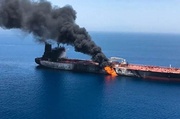
A second significant consequence is the return of energy security to the center of global politics. The Strait of Hormuz is not merely a geographical passage; it is a vital artery of the international economy, the security of which is directly linked to the flow of oil and gas and the stability of global markets. Developments in this region clearly demonstrate that a crisis in the Persian Gulf—by driving up energy costs, disrupting supply chains, and destabilizing markets—can impact the economies of nations located thousands of kilometers away.
This issue holds particular significance for the industrial powers of Asia and Europe. Countries dependent on energy imports are increasingly confronting the reality that their economic security is inextricably linked to security developments in the Persian Gulf. Under these circumstances, any attempt to establish a stable security order in the region—without accounting for the role of Iran—will face serious limitations.
A third consequence is the erosion of US allies' confidence in Washington’s security guarantees. A cornerstone of American global influence is its extensive network of allies and security partners. These nations not only benefit from US military capabilities, but they have also tied their own strategic stability—to a significant extent—to the credibility of Washington’s commitments. Recent experiences, however, may raise new questions regarding the reliability of these guarantees. US allies are compelled to consider whether Washington’s involvement in a crisis necessarily enhances their own security, or if it might instead expose them to the unintended consequences of American decisions.
In such an environment, the inclination to diversify foreign relations, strengthen independent defense capabilities, and reduce strategic dependence on Washington may grow. This trend does not necessarily imply a complete distancing of US allies from the United States; rather, it signals a shift in their calculations and a decline in Washington’s monopoly over the provision of international security.
From the perspective of great-power competition, recent developments are also of significant importance. The more political, military, and economic resources the United States devotes to managing costly crises, the more constrained its capacity becomes to focus on other strategic priorities—including competition with China. Meanwhile, powers such as China and Russia may view these developments as a shift in the global balance, accompanied by a reduction in Washington’s focus on other regions. This does not, however, imply an automatic victory for America’s rivals; rather, it suggests that the costs of a regional confrontation could be distributed across a much broader scope.
Ultimately, perhaps the most significant message of the Iran conflict is a shift in global perceptions regarding the limits of American power. Washington continues to possess some of the world’s greatest military and economic capabilities, and it would be premature to speak of the end of its power; however, its departure from a position of undisputed strategic supremacy is a distinct and observable phenomenon. A failure to impose one’s political will—even when backed by military superiority—can erode the credibility of threats and the capacity for deterrence.
From this perspective, the failure of the project to force Iran’s submission is not merely a failed military calculation; it carries a broader message for the international order: great powers can no longer guarantee their desired political outcomes by relying solely on military superiority. Perhaps this is why the consequences of this confrontation—as Foreign Policy notes—are only just beginning to unfold. The world that emerges from this conflict may not be the same as the one that preceded it; it will be a world in which the credibility of American power is measured, more than ever, by the nation’s capacity to manage crises, acknowledge its own limitations, and respect geopolitical realities.
MNA










Your Comment